Every winter in Brooklyn, plumbing emergency calls surge the moment temperatures suddenly drop. It is not just that it is cold. It is how fast the temperature changes and how older plumbing systems react.
If you have ever wondered why pipes burst, boilers fail, or water heaters struggle the first truly freezing week of winter, this guide explains exactly what is happening inside your home.
What Counts as a Cold Snap in Brooklyn
A cold snap usually means:
- Temperatures dropping below 32°F
- Overnight lows in the teens or single digits
- A rapid temperature drop within 24 to 48 hours
- Strong winds increasing exposure
Brooklyn homes, especially older brownstones and multi-family buildings, are not always insulated for extreme overnight swings.
1. Pipes Freeze Faster Than People Expect
When temperatures drop quickly, exposed pipes do not have time to adjust.
Pipes are most vulnerable in:
- Basements
- Crawl spaces
- Exterior walls
- Under kitchen and bathroom sinks
- Near drafty windows
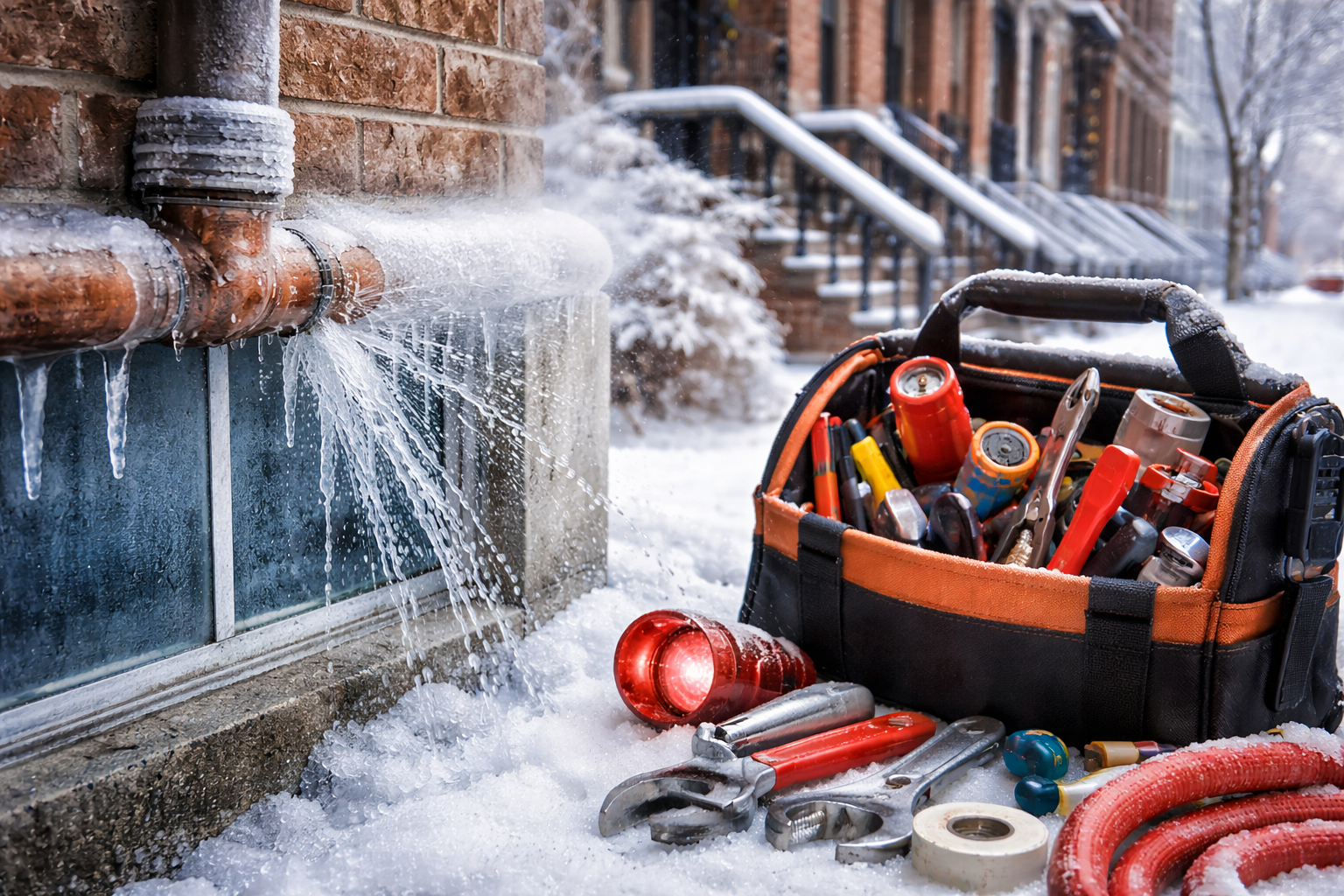
Water expands when it freezes. That expansion builds pressure inside the pipe until something gives.
Why this leads to emergencies:
- Pipes burst while homeowners are sleeping
- Water floods basements before anyone notices
- Thawing reveals cracks hours later
This is why frozen pipe emergencies spike during the first major freeze of the season.
2. Boiler Systems Are Already Working Hard
When a cold snap hits, your boiler runs longer cycles to keep up.
In Brooklyn homes with radiator systems, that means:
- Higher pressure inside heating pipes
- Increased stress on aging valves
- Sediment buildup affecting performance
- Expansion tanks under strain
If your system has not had recent service, problems surface quickly.
This is why annual boiler maintenance is critical before winter arrives.
3. Water Heaters Struggle Under Heavy Demand
Cold weather changes water heater performance in two major ways:
- Incoming water temperature is much colder
- Households use more hot water
That means your water heater must work harder and longer to reach the same temperature.
During a cold snap:
- Showers feel lukewarm
- Recovery time increases
- Sediment slows heating efficiency
- Older tanks fail under stress
Cold weather reveals weaknesses that may have been building for months.
4. Rapid Expansion and Contraction of Pipes
Metal pipes expand and contract with temperature changes.
During a sudden cold snap:
- Pipes contract quickly
- Weak joints separate
- Seals shrink
- Hairline cracks form
When temperatures warm back up, water pressure returns and leaks begin.
Many homeowners think plumbing failures are random. In reality, they are often triggered by temperature shock.
5. Increased Household Usage During Winter
Winter also means:
- More time spent indoors
- More showers
- More laundry
- More cooking
- Holiday guest visits
The plumbing system simply experiences more demand.
Cold snaps combine stress from temperature and stress from usage at the same time.
What Fails Most Often During Cold Snaps
| Plumbing Component | Why It Fails in Cold Weather |
|---|---|
| Exposed water pipes | Freezing and expansion |
| Outdoor spigots | Backed-up frozen water |
| Boiler pressure valves | System strain |
| Expansion tanks | Pressure imbalance |
| Water heater tanks | Sediment and stress |
| Washing machine hoses | Brittle rubber |
These failures are predictable. They are not random.
Why Brooklyn Homes Are Especially Vulnerable
Brooklyn housing stock presents unique risks:
- Pre-war construction
- Steam heating systems
- Shared plumbing lines in multi-family buildings
- Poorly insulated basements
- Exterior plumbing against brick walls
Older infrastructure combined with modern water demand creates a perfect storm during extreme cold.
Warning Signs Before a Cold Snap Emergency
If you notice any of these before or during a freeze, act quickly:
- Low water pressure
- Boiler making unusual noises
- Hot water running out faster than usual
- Frost on exposed pipes
- Small leaks under sinks
Small problems become large problems quickly in freezing temperatures.
How to Reduce Your Risk Before the Next Cold Snap
Preparation is the difference between a minor inconvenience and a flooded basement.
Smart winter steps:
- Insulate exposed pipes
- Seal drafts near foundation walls
- Keep heat consistent even when away
- Let faucets drip during extreme cold
- Schedule a winter plumbing inspection
For a complete seasonal prep checklist, review the Brooklyn winter plumbing guide on our site.
The Diamond Club Advantage During Winter
Cold snap emergencies often reveal problems that could have been prevented.
With the A Good Plumber Diamond Club, homeowners receive:
- Yearly plumbing inspections
- Early identification of freeze-prone pipes
- Priority service during winter emergencies
- Discounts on repairs
Preventive maintenance is far less expensive than emergency restoration.
When to Schedule Service
If a cold snap is forecasted and you have not had your plumbing system inspected this year, now is the time.
If you notice warning signs during freezing temperatures, schedule service immediately. Acting early prevents major damage.
A Good Plumber helps Brooklyn homeowners prepare before the freeze and respond quickly when emergencies happen.
Frequently Asked Questions
Why do plumbing emergencies spike during Brooklyn cold snaps?
Rapid temperature drops freeze exposed pipes faster, increase boiler run time, and put extra demand on hot water heaters. Older Brooklyn homes with basements, exterior-wall piping, and steam systems are especially vulnerable.
How fast can pipes freeze in Brooklyn?
Pipes can freeze in a matter of hours when temperatures drop below freezing, especially in unheated basements, crawl spaces, and along exterior walls. Wind and drafts make freezing happen even faster.
What are the early warning signs of frozen pipes?
Common warning signs include little or no water from a faucet, a weak trickle, visible frost on exposed piping, and strange odors from drains. If only one fixture is affected, the freeze is often localized.
What should I do if I think a pipe is frozen?
Shut off the main water valve, open the affected faucet, and thaw the pipe safely with controlled heat like a hair dryer or heating pad. Avoid open flames. If the pipe is inside a wall or you cannot restore flow, call a plumber.
Can frozen pipes burst when they thaw?
Yes. Many pipes burst during thawing because pressure builds behind the ice blockage. That is why shutting off the water first is so important.
Why does my hot water run out faster in winter?
Incoming water is colder in winter, so your water heater needs more time and energy to heat it. Households also use more hot water during cold weather, which increases demand and recovery time.
What causes boiler issues during cold snaps?
Boilers run longer cycles during extreme cold, which increases system pressure and exposes weak components. Issues like low pressure, air in the lines, worn valves, or sediment buildup often show up during the first deep freeze.
How can I reduce the risk of winter plumbing emergencies?
Insulate exposed pipes, seal drafts, keep indoor heat consistent, disconnect hoses, and consider letting faucets drip during extreme cold. A yearly inspection helps identify freeze-prone areas before an emergency happens.
Want year-round protection? Learn more about the A Good Plumber Diamond Club maintenance plan, view our Brooklyn winter plumbing guide, or book a plumbing appointment in Brooklyn.
