If gas service has been shut off in your Brooklyn building, it can feel stressful fast. Tenants may lose cooking gas, hot water, heat, or access to appliances depending on how the building is set up. The most important thing to know is this: gas service is not usually restored by simply “turning it back on.”
In New York City, gas shutoffs often require licensed plumbing work, proper documentation, inspections, approvals, and utility coordination before service can be restored safely.
This guide from A Good Plumber explains what to do after a gas shutoff in Brooklyn, who to call, what the process may involve, and how building owners can avoid delays.
First: If You Smell Gas, Treat It as an Emergency
If you smell gas or suspect an active leak, do not try to investigate it yourself.
- Leave the area immediately
- Do not use light switches, phones, appliances, or open flames near the smell
- Call 911 from a safe location
- Contact the gas utility after you are safely away from the building
Gas safety comes first. Once the immediate emergency is handled and gas service is shut off, the restoration process can begin.
Why Gas Service Gets Shut Off in Brooklyn Buildings
Gas service can be shut off for several reasons. In Brooklyn, shutoffs are especially common in older multi-family buildings, mixed-use properties, and buildings with aging gas piping systems.
Common reasons for a gas shutoff include:
- Suspected gas leak
- Failed gas piping inspection
- Unsafe or corroded gas piping
- Improper gas line installation
- Unpermitted gas work
- Utility inspection concerns
- Required repairs after DOB or utility review
In many cases, the shutoff is not the problem itself. It is the result of a safety concern that must be corrected before service can return.
What Happens After Gas Is Shut Off?
Once gas service is shut off, the next steps depend on the reason for the shutoff and the condition of the gas piping system. However, most Brooklyn building owners can expect a process that includes inspection, repair, documentation, approval, and coordination with the utility.
The general process often includes:
- Confirm why gas service was shut off
- Hire a licensed plumber experienced with NYC gas work
- Inspect the gas piping system
- Identify required repairs or corrections
- Complete necessary plumbing work
- File required documentation with the proper agencies
- Coordinate required inspections
- Work toward final approval and gas restoration
This is why working with the right plumber matters. Gas restoration is not just a repair issue. It is also a compliance issue.
Step 1: Find Out Why the Gas Was Shut Off
Before anything can be fixed, the building owner or property manager needs to understand why the shutoff happened.
Start by checking:
- Notices from Con Edison, National Grid, or the gas utility
- DOB violations or inspection records
- Tenant complaints related to gas odor or appliance issues
- Recent plumbing or renovation work
- Any failed gas piping inspections
If the shutoff is tied to unsafe piping, a leak, or improper installation, repairs and inspections may be required before restoration can move forward.
Step 2: Call a Licensed Brooklyn Plumber
Gas piping work in New York City must be handled by properly licensed professionals. This is not a DIY situation and not something a general handyman should attempt.
A licensed plumber can inspect the system, identify the cause of the issue, explain what needs to happen, and help move the restoration process forward.
If you need help with Local Law 152 inspections in Brooklyn, gas piping evaluations, or compliance support, working with an experienced NYC plumbing company can help avoid unnecessary delays.
A Good Plumber can help with:
- Gas piping inspections
- Gas leak troubleshooting
- Gas line repairs
- Violation correction support
- DOB-related documentation
- Utility coordination
- Local Law 152 compliance support
If your building is already without gas, acting quickly can help reduce tenant frustration and avoid unnecessary delays.
Step 3: Inspect the Gas Piping System
Before gas can be restored, the piping system may need to be inspected to determine whether it is safe and compliant.
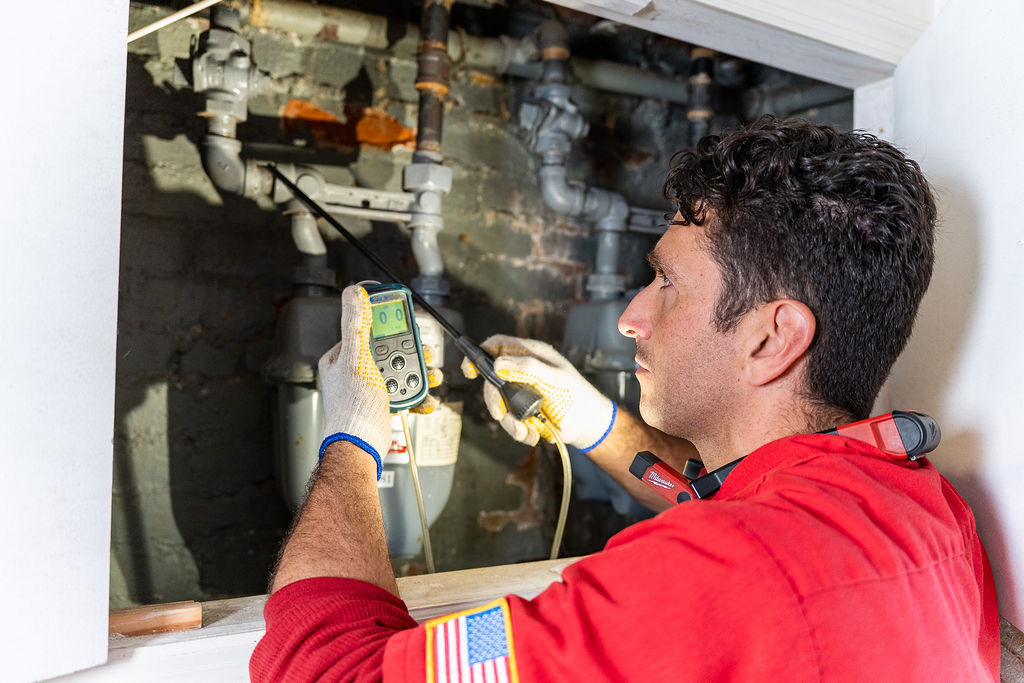
The inspection may include checking for:
- Leaks
- Corrosion
- Deteriorated piping
- Improper fittings
- Unsafe appliance connections
- Unpermitted or outdated work
- Issues in basements, boiler rooms, common areas, or risers
Brooklyn buildings often have older gas piping layouts, which can make inspections more complex. Multi-family properties, mixed-use buildings, and older brownstones may require extra care during evaluation.
Property owners dealing with recurring issues may also benefit from reading our Brooklyn winter plumbing emergency guide to better understand seasonal stress on pipes and gas systems.
Step 4: Complete Required Repairs
If unsafe conditions are found, repairs must be completed before gas service can be restored.
Common gas piping repairs may include:
- Replacing corroded pipe sections
- Repairing leaking gas lines
- Correcting improper fittings
- Updating appliance connections
- Addressing boiler room gas piping issues
- Resolving DOB violation items
The goal is not only to restore gas service, but to restore it safely and correctly.
Step 5: Handle Filings, Inspections, and Approvals
This is where many property owners get stuck. Gas restoration often involves paperwork, agency coordination, and approval steps. Missing or incorrect documentation can delay the process.
Depending on the situation, the process may involve:
- DOB filings
- Inspection scheduling
- Utility coordination
- Licensed plumber sign-offs
- Correction documentation
- Final approval before gas is restored
A Good Plumber helps building owners and property managers understand what is needed and keeps the process moving.
Gas Shutoff vs Local Law 152: How They Connect
Local Law 152 inspections in Brooklyn require periodic gas piping inspections for many New York City buildings. While a Local Law 152 inspection is not the same thing as an emergency gas shutoff, both are connected by the same core issue: gas piping safety.
If a building has neglected gas piping, missed inspection requirements, or unresolved unsafe conditions, the risk of violations and service interruptions increases.
Local Law 152 helps identify issues such as:
- Corrosion
- Unsafe piping conditions
- Deterioration
- Improper installation
- Conditions requiring repair or further evaluation
Staying ahead of Local Law 152 requirements can help property owners avoid surprise compliance problems later.
How Long Does Gas Restoration Take?
There is no one-size-fits-all timeline. Some issues are straightforward. Others can take longer because repairs, inspections, filings, DOB review, or utility coordination may be required.
Timeline depends on:
- The reason gas was shut off
- The condition of the piping system
- Whether repairs are required
- How quickly access can be provided
- DOB or utility inspection availability
- Whether documentation is complete
The best way to reduce delays is to bring in an experienced licensed plumber as soon as possible.
What Property Owners Should Do Immediately
If gas has been shut off in your Brooklyn building, use this quick checklist.
| Step | What To Do | Why It Matters |
|---|---|---|
| 1 | Confirm the reason for shutoff | Determines what repairs or filings may be needed |
| 2 | Contact a licensed plumber | Gas work requires qualified professionals |
| 3 | Provide building access | Speeds up inspection and repair timelines |
| 4 | Complete required repairs | Unsafe conditions must be corrected before restoration |
| 5 | Coordinate approvals | Gas service restoration often requires documentation and inspection |
How A Good Plumber Helps After a Gas Shutoff
A Good Plumber works with Brooklyn property owners, landlords, co-op boards, condo associations, and property managers who need help after a gas shutoff.
Our team can help with:
- Gas piping evaluation
- Repair planning
- Licensed plumbing work
- Compliance support
- DOB-related documentation
- Local Law 152 inspection support
- Clear communication throughout the process
We understand that gas shutoffs disrupt tenants, owners, and building operations. Our goal is to help resolve the issue professionally, safely, and as efficiently as possible.
How To Avoid Future Gas Shutoffs
The best way to deal with gas shutoffs is to prevent them before they happen.
Property owners should:
- Stay current with Local Law 152 inspection deadlines
- Address minor gas piping issues early
- Keep mechanical rooms and access areas clear
- Respond quickly to gas odors or tenant complaints
- Work only with licensed plumbers for gas piping work
- Keep records of inspections, repairs, and filings
Preventative maintenance and regular gas piping inspections in Brooklyn are always easier than emergency restoration after a shutdown.
Need Help After a Gas Shutoff in Brooklyn?
If your building’s gas has been shut off, do not wait. The sooner you understand the cause and begin the correct process, the faster you can work toward safe restoration.
A Good Plumber can help inspect, repair, document, and guide your building through the next steps.
Call (718) 648-6838 today for gas shutoff support, gas piping inspections, or compliance help in Brooklyn.
