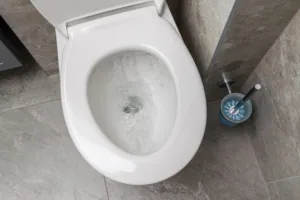
A toilet that keeps running might seem like a minor annoyance, especially if everything still flushes normally. But that constant trickle of water usually means something inside the tank is not working the way it should.
Sometimes the toilet runs continuously. Other times it stops for a few minutes and suddenly refills even though nobody used it. You may also notice that jiggling the handle makes the sound stop temporarily.
If you notice water splashing or flowing excessively from the tank, or the toilet is having a hard time keeping the right water level, these are clear signs that something is wrong. Maybe water is leaking from the tank, or the toilet’s not able to hold the water at the right level.
For people who own homes in Brooklyn, or for landlords and property managers, a toilet that won’t stop running is something you should fix right away. At first, it might seem like just a small problem with the tank, but it can waste a lot of water, make your utility bills go up, and sometimes it means there are bigger issues with the plumbing that need a professional to take care of.
Why Does a Toilet Keep Running?
A toilet tank is designed to refill after each flush and then stop once it reaches the correct water level.
When all the parts are doing their job right, things usually get done pretty quickly.
- You flush the toilet.
- Water leaves the tank and enters the bowl.
- The flapper closes.
- The fill valve is what puts water back into the tank, so it’s always full and ready to go.
- When the tank is full, the valve automatically shuts off, stopping the flow of liquid at the right level.
If one of those parts doesn’t shut, seal, or adjust right, the water will just keep on flowing.
The issue is often found inside the toilet tank itself, but it can also be caused by other things like leaks, problems with the water pressure, or old and worn-out plumbing connections.
Common Causes of a Running Toilet
The Flapper Is Worn or Not Sealing Correctly
The flapper is one of the most common causes of a running toilet.
At the bottom of the tank, there’s a part called the flapper – it lifts up when you flush the toilet, and that’s when water rushes into the bowl. After the flush is done, the flapper should go back down and make a tight seal with the water, so everything works properly. If it doesn’t, you might have a problem with your toilet.
Over time, the flapper can become:
- Worn
- Warped
- Cracked
- Misaligned
- Covered with buildup
- Unable to fully seal against the flush valve
This is what happens when there’s a problem – a small amount of water keeps leaking from the tank into the bowl, it’s like a steady trickle.
When the water level in the tank goes down, the fill valve kicks in again to refill it with water.
You know how it is, your toilet will be silent for a bit, and then all of a sudden it starts refilling again, it’s like it’s going through this never-ending cycle.
The Fill Valve Is Not Shutting Off
The fill valve controls the water entering the toilet tank.
When the tank is filled to the right level, the valve should turn off by itself. But if the fill valve is worn out or not working properly, it might keep letting water into the tank even when it’s already full. This can cause problems and waste water. It’s a good idea to check the fill valve regularly to make sure it’s working correctly. If it’s not, you might need to replace it to avoid any issues.
You may hear:
- Constant running water
- A faint hissing sound
- Water continuously entering the overflow tube
- The toilet repeatedly filling for short periods
Toilets that have been around for a while can have problems with their fill valves. These valves can wear out over time, especially if the toilet is old.
You might need to replace or adjust the valve to fix the issue, but if lots of parts are failing all at once, it’s probably a good idea to take a closer look at the whole toilet. Sometimes, it’s not just one thing that’s going wrong, and you might need to consider replacing the entire thing to avoid more problems down the line.
The Flapper Chain Is Too Tight or Too Loose
The small chain connecting the toilet handle to the flapper plays an important role in every flush.
If the chain is too short, it can get in the way and stop the flapper from shutting all the way.
If the chain is too long, it can get tangled or stuck under the flapper, which can cause problems.
Either way, a tiny gap can form and let water leak out of the tank.
One clue is a toilet that stops running after you jiggle the handle. Moving the handle changes the chain position and temporarily allows the flapper to reseat.
If your toilet keeps running and you have to jiggle the handle to make it stop, that’s a sign something’s not right inside the tank. Usually, it’s just a matter of adjusting or fixing something simple.
The Water Level Is Set Too High
Every toilet tank has a maximum water level.
If the fill valve or float is adjusted too high, water may continuously spill into the overflow tube instead of shutting off.
Look inside the tank while the toilet is running.
If water is pouring straight into the overflow tube, it’s likely that the water level in the tank is too high or the fill valve isn’t turning off like it should. You might need to check the valve to make sure it’s working properly, or adjust the water level to prevent this from happening.
This is typically a pretty simple issue for a plumber to figure out.
The Float Is Sticking or Improperly Adjusted
The float tells the fill valve when enough water has entered the tank.
The float in a toilet can appear in different forms, such as a ball connected to an arm or a plastic piece that slides up and down the fill valve.
If it sticks, becomes damaged, or is positioned incorrectly, the valve may not receive the signal to stop filling.
The result is a toilet that continues to run even though the tank already contains enough water.
The Flush Valve or Tank Components Are Worn
Sometimes replacing a flapper does not solve the problem.
Things can go wrong with the flapper too – the surface it seals against can wear out. And inside, parts can crack, get rusty, come loose, or move out of place over time.
Older toilets may contain several replacement parts installed at different times. One component gets replaced, another gets adjusted, and eventually the collection of aging parts stops working together correctly.
When it gets to that stage, it’s probably better to just rebuild the inside parts of the tank or even get a new toilet altogether, rather than keep fixing one thing at a time.
What Is a Phantom Flush?
A phantom flush is when a toilet suddenly begins refilling even though nobody flushed it.
There is nothing mysterious happening.
Water is slowly leaking from the tank into the bowl. Once enough water escapes, the fill valve turns on automatically to bring the tank back to the correct level.
The toilet might stay quiet for a while, but once enough water leaks out again, it’ll probably start making noise.
This cycle can continue throughout the day and night.
A leaking flapper is usually the main reason you get phantom flushing in your toilet, but it’s not the only thing that can cause this problem – other parts in the tank can also be to blame.
Why You Should Not Ignore a Running Toilet
A toilet that still works when you flush it might not seem like a big deal, but not doing anything about it can lead to extra expenses and more damage down the line.
Increased Water Usage
Even a relatively small leak between the tank and bowl means fresh water is constantly being replaced.
If the toilet runs frequently or continuously, that wasted water can add up.
Additional Wear on Toilet Components
A fill valve designed to operate briefly after each flush may instead cycle throughout the entire day.
The more something is used, the quicker it can break down. Things that are used a lot tend to wear out faster.
Things like a worn-out seal, a damaged valve, or a faulty part in the tank usually don’t get better on their own – they just get worse as time goes by.
Repairing the problem while it is still simple is usually easier than waiting until multiple components begin failing.
How Can You Tell If Your Toilet Is Leaking Into the Bowl?
One simple check is to listen carefully when nobody is using the bathroom.
If you notice the toilet refilling itself from time to time, it’s probably because water is leaking out of the tank somewhere.
If you take off the tank lid, you can see what’s going on inside.
Look for:
- Water entering the overflow tube
- A flapper that does not sit flat
- A chain caught beneath the flapper
- A fill valve that never completely stops
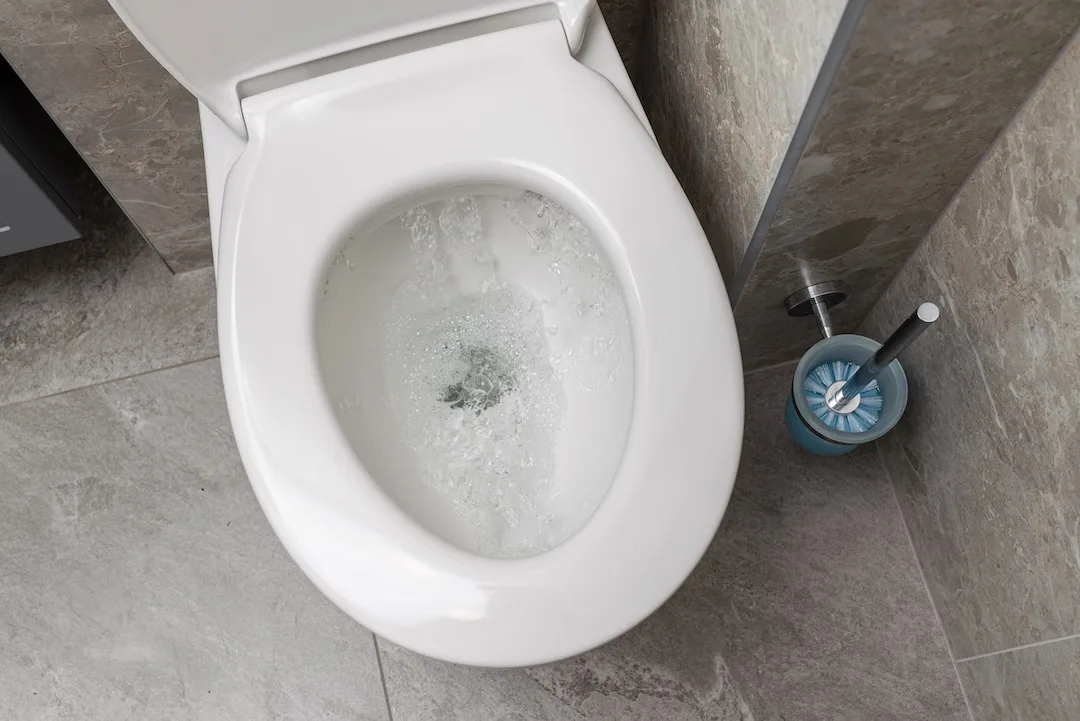
- Water movement inside the bowl when the toilet has not been flushed
Don’t try to force or bend parts that you’re not familiar with. It’s just not worth it – toilet parts are pretty cheap, but the water damage that can happen if a tank or connection breaks by accident can be really expensive.
What If the Toilet Is Leaking Around the Base?
A toilet running internally and a toilet leaking onto the floor are two different problems.
Water appearing around the base of the toilet may indicate:
- A failed toilet seal
- Loose mounting hardware
- A leaking water supply connection
- Condensation
- A cracked tank or bowl
- Water escaping during flushing
A toilet leaking onto the floor should be inspected promptly.
Don’t Ignore Water Around the Toilet
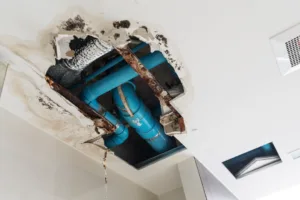
Water can seep under the floor and even into the ceiling below, and by the time you notice how bad it is, it’s already done a lot of damage.
Repair the Toilet or Replace It?
Many running toilet problems can be repaired without replacing the entire fixture.
A plumber may recommend repairing the toilet when:
- The toilet is otherwise in good condition
- The problem is limited to the flapper or fill valve
- The tank and bowl are not cracked
- Replacement components are readily available
Replacement may make more sense when:
- The toilet is very old
- Internal components repeatedly fail
- The porcelain is cracked
- The toilet frequently clogs
- Several repairs have already been made
- You are renovating the bathroom anyway
You might want to get a professional to take a look and figure out if fixing your toilet again is a good idea or if it’s time to just get a new one – it’s all about what’s best for the long run.
Running Toilets in Older Brooklyn Homes
Brooklyn properties often have plumbing systems that have been repaired and modified many times throughout the life of the building.
A bathroom may contain a newer toilet connected to an older shutoff valve, supply line, or drain system. In other homes, the toilet itself may have been operating for decades with several generations of replacement parts inside the tank.
That does not automatically mean there is a major plumbing problem.
Toilet problems that keep happening are a sign that something is wrong and needs to be checked more closely.
A plumber can evaluate not only the parts inside the tank but also the surrounding water connections and drainage if the toilet continues giving you trouble.
When Should You Call a Plumber?
Consider scheduling toilet repair if:
- The toilet runs continuously
- The toilet refills when nobody has used it
- You have to jiggle the handle to make it stop
- Water is constantly entering the overflow tube
- The toilet does not flush properly
- Water appears around the toilet
- The shutoff valve does not work
- The same problem keeps returning after repairs
Stop Using the Toilet if Water Is Escaping
If you notice water overflowing from the toilet and spreading to the floor, or even leaking into another room or through the ceiling, you should stop using it right away. This is a serious issue that needs your attention immediately. Don’t wait, take action now to fix the problem and prevent any further damage.
Brooklyn Toilet Repair From A Good Plumber
A running toilet is usually trying to tell you something.
Fixing a toilet can be a simple task or a more complicated one. Sometimes, all it takes is a small tweak or swapping out a single part to get everything working properly again. But other times, the problem can be more complex, with multiple worn-out parts or a bigger issue with the plumbing that needs to be figured out.
A Good Plumber provides toilet repair, plumbing diagnostics, leak repair, and general plumbing services throughout Brooklyn.
If your toilet is constantly running, gets clogged all the time, leaks at the base, or just doesn’t flush right, our team of plumbers can figure out what’s wrong and tell you the best way to fix it. We can help with all kinds of toilet problems, so you don’t have to deal with the hassle and mess. Our plumbers are experts at finding the cause of the issue and recommending the right repair to get your toilet working properly again.
Need a Plumber in Brooklyn?
Need a plumber in Brooklyn? Call (718) 648-6838 to schedule an appointment or book online for all your plumbing needs.
Frequently Asked Questions
Why does my toilet randomly run for a few seconds?
You know how sometimes your toilet tank just keeps running and running? This usually happens when there’s a slow leak from the tank into the bowl. What’s going on is that as the water level in the tank drops, the fill valve kicks in to refill it. A lot of the time, the problem is a worn-out flapper – it’s like the toilet’s seal, and when it gets old, it can’t do its job properly.
Why does jiggling the toilet handle make it stop running?
When you move the handle, it also moves the chain that’s attached to the flapper. Now, if the chain or the flapper isn’t sitting quite right, jiggling the handle might just do the trick to get the flapper to seal properly, at least for a little while.
Can a running toilet increase my water bill?
Yes. A toilet that continuously or repeatedly refills uses water even when nobody is using the bathroom.
Is a running toilet an emergency?
If the water stays inside the toilet, you’re probably okay. But if it starts leaking onto the floor, or the bowl overflows, or you notice a crack in the toilet, that’s a different story. And if water is seeping into the ceiling below, you should take care of it right away. These kinds of problems can cause more damage if you don’t fix them quickly.
Should I repair or replace a running toilet?
If the issue is just with a part inside, fixing it is usually enough. But for older toilets that have a lot of problems, cracks, don’t flush well, or have many worn-out parts, it’s probably better to just get a new one.
Can a plumber fix a toilet that keeps running?
Yes. A plumber can inspect the flapper, fill valve, float, flush valve, handle assembly, supply connection, and other components to determine why the toilet continues running.
This guide is just for learning, it’s not meant to be a substitute for professional advice. Every house has its own unique plumbing setup, so what works for one place might not work for another. If you’re not sure about how to fix a plumbing problem or you see water leaking somewhere, it’s best to call a licensed plumber who can help you out. They have the training and experience to deal with all sorts of plumbing issues, so you can trust them to get the job done right.