When frozen pipes burst, the damage can escalate quickly. In Brooklyn homes and multi-family buildings, burst pipes are one of the most destructive winter plumbing emergencies. Water damage spreads fast, repairs become expensive, and residents often face displacement if the problem is not handled immediately.
Understanding what actually happens when frozen pipes burst, why Brooklyn properties face higher risk, and what to do step by step can help limit damage and protect your property.
Why frozen pipes burst in the first place
Frozen pipes burst because water expands when it freezes. As temperatures drop, water inside a pipe turns to ice and expands outward. That expansion creates intense pressure inside the pipe.
Eventually, the pipe cannot contain the pressure.
Most bursts occur:
- At weak joints or fittings
- In corroded or aging pipes
- Near exterior walls
- In unheated basements, crawl spaces, or cellars
In many cases, the pipe does not burst while frozen. Instead, it fails when temperatures rise and water flow returns, forcing pressurized water through a cracked or weakened section.
The moment a frozen pipe bursts
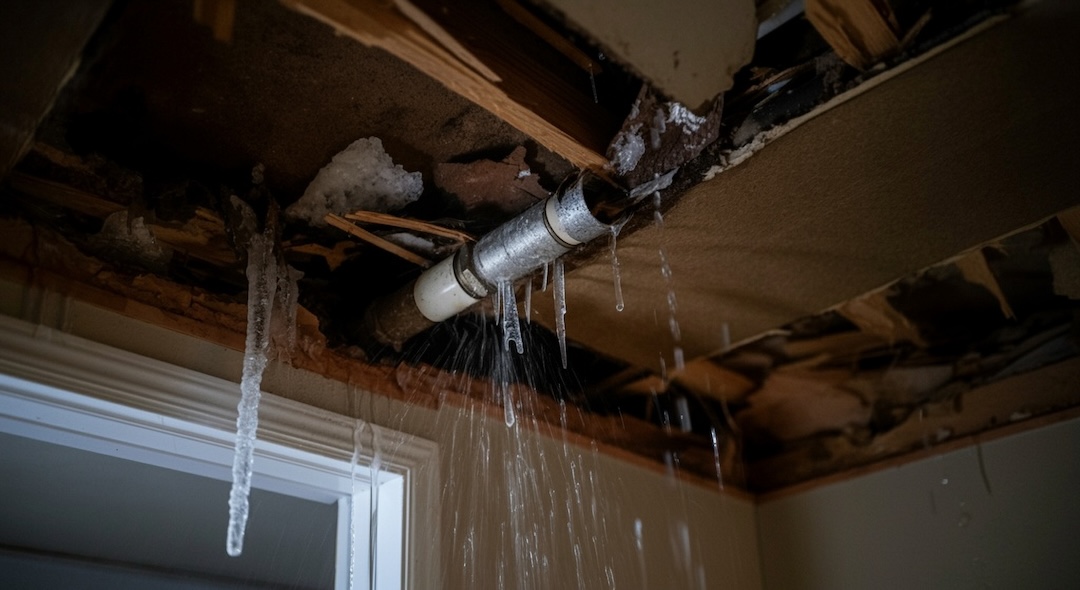
Once a pipe bursts, water begins flowing immediately. Depending on pipe size and water pressure, hundreds of gallons of water can escape in a short period of time.
Within minutes, homeowners may notice:
- Water pooling on floors
- Water dripping from ceilings below
- Sudden drops in water pressure
- Damp or bulging walls
Because many pipes run behind walls or ceilings, damage often spreads before the source becomes visible.
How water damage spreads through Brooklyn homes
Brooklyn buildings often feature stacked plumbing, shared walls, and older construction materials. This allows water to move quickly and unpredictably.
Once water escapes a burst pipe, it can:
- Soak drywall and plaster
- Warp hardwood floors and subflooring
- Saturate insulation
- Travel along beams and framing
- Leak into neighboring apartments
In multi-family buildings, a single burst pipe can damage multiple units, creating disputes between tenants, landlords, and insurance providers.
Secondary damage caused by burst pipes
The visible flooding is only the first problem. Secondary damage often causes the highest costs.
Mold growth
Moisture trapped behind walls or under floors creates ideal conditions for mold. In many cases, mold begins forming within 24 to 48 hours.
Structural damage
Prolonged moisture weakens wood framing, drywall, and subflooring. Ceilings may sag or collapse if water is not removed quickly.
Electrical hazards
Water near outlets, wiring, or breaker panels creates serious safety risks. Electrical shorts and fire hazards may develop even after water dries.
Personal property loss
Furniture, electronics, clothing, and stored belongings often suffer permanent damage during flooding events.
Warning signs that a pipe may have already burst
Not every burst pipe announces itself with obvious flooding. Some leaks remain hidden for hours or even days.
Watch for:
- Unexplained water stains on ceilings or walls
- Musty or damp odors
- Peeling paint or bubbling plaster
- Sudden spikes in water bills
- Loss of water pressure
If any of these signs appear during winter, immediate inspection is critical.
What to do immediately after a pipe bursts
Step 1: Shut off the main water supply
This is the most important step. Turning off the main valve stops additional water from entering the system.
Step 2: Turn off electricity if necessary
If water reaches outlets, appliances, or electrical panels, shut off power to the affected area to reduce risk.
Step 3: Drain remaining water
Open nearby faucets to relieve pressure and allow remaining water to drain from the system.
Step 4: Call a licensed plumber immediately
Burst pipes require professional repair. Temporary fixes rarely hold and often fail under pressure.
Why temporary and DIY fixes usually fail
Many homeowners attempt to stop leaks with tape, clamps, or sealants. While these may slow dripping, they rarely solve the problem.
DIY fixes fail because:
- Internal cracks extend beyond visible damage
- Frozen pipes often weaken surrounding sections
- Pressure inside the line remains high
- Materials degrade quickly under water pressure
Professional repairs involve replacing or rebuilding the damaged section to prevent repeat failures.
Why Brooklyn homes face higher frozen pipe risk
Brooklyn properties face unique challenges that increase winter plumbing risks.
Older building infrastructure
Many homes still use older pipe materials that are more vulnerable to freezing and cracking.
Poor insulation
Basements, cellars, and crawl spaces often lack modern insulation.
Renovations and conversions
Converted spaces may contain exposed or improperly insulated plumbing.
Shared heating systems
Uneven heating in multi-unit buildings can leave certain areas cold enough for pipes to freeze.
Because of these factors, proactive winter preparation matters more in Brooklyn than in newer developments.
Insurance and burst pipes in Brooklyn
Burst pipes often trigger insurance claims, but coverage depends on several factors.
Insurance companies typically look at:
- Whether the homeowner maintained heat
- Whether the damage was sudden or gradual
- Whether preventive steps were taken
Delayed response or visible neglect may complicate claims. Documenting repairs and acting quickly helps protect coverage.
How burst pipes affect landlords and tenants
In rental properties, burst pipes create legal and logistical challenges.
Landlords may face:
- Emergency repair obligations
- Temporary tenant relocation
- Liability concerns
- Insurance coordination
Tenants may experience:
- Loss of heat or water
- Property damage
- Temporary displacement
Clear communication and fast professional repairs help reduce conflict and downtime.
How A Good Plumber Corp. responds to burst pipe emergencies
A Good Plumber Corp. provides emergency plumbing services throughout Brooklyn during winter months.
Our licensed team offers:
- Emergency water shutoff assistance
- Burst pipe repair and replacement
- Frozen pipe evaluations
- Damage prevention guidance
- Code-compliant plumbing repairs
We focus on stopping damage quickly and restoring safe water service as fast as possible.
Long-term damage prevention after a burst pipe
Once repairs are complete, prevention becomes critical.
Insulate vulnerable pipes
Add insulation to pipes near exterior walls and unheated spaces.
Maintain consistent heat
Avoid turning heat off completely, even during short absences.
Seal drafts
Close gaps near windows, doors, and foundation penetrations.
Schedule winter plumbing inspections
Professional inspections identify weak points before freezing weather causes problems.
When to call a plumber immediately
Call a licensed plumber right away if:
- Water is actively leaking
- You cannot locate the burst pipe
- Water reaches electrical components
- Multiple units are affected
- Pipes freeze repeatedly
Delays often increase repair costs and damage.
Protect your Brooklyn home this winter
Frozen pipes and burst plumbing can turn into major emergencies within hours. However, fast action and professional repairs greatly reduce damage and recovery time.
If a frozen pipe has burst in your Brooklyn home or building, contact A Good Plumber immediately. Our experienced team helps protect your property, your tenants, and your peace of mind throughout the winter season.
How to Prevent Frozen Pipe Issues Before They Start
Frozen and burst pipes are often preventable. In Brooklyn homes, especially older buildings, small winter prep steps make a big difference once temperatures drop.
First, identify vulnerable areas such as basements, cellars, exterior walls, and unheated spaces. Pipes in these locations freeze faster and fail under pressure.
Next, insulate exposed pipes and seal drafts near windows, doors, and foundation penetrations. Even minor cold air leaks can drop pipe temperatures enough to cause freezing.
In addition, keep indoor heat consistent during winter, even when the building is unoccupied. Turning heat off completely raises the risk of frozen pipes overnight.
During extreme cold, allow faucets to drip slightly to keep water moving. Flowing water freezes more slowly and reduces pressure buildup inside pipes.
Most importantly, follow a structured winter preparation plan. Our Winter Plumbing Checklist outlines the most common freeze-risk areas and the steps Brooklyn homeowners and landlords should take before and during winter.
👉 View our Winter Plumbing Checklist to reduce the risk of frozen and burst pipes this season.
Frequently Asked Questions About Burst Pipes in Brooklyn
How do I know if a frozen pipe has burst?
Look for sudden water pooling, water stains on ceilings or walls, damp smells, bubbling paint, or a sharp drop in water pressure. In multi-family buildings, leaks may appear in a unit below before you see the source.
What should I do first if a pipe bursts?
First, shut off the main water supply to stop flooding. Next, open nearby faucets to relieve pressure. If water is near outlets or electrical panels, shut off power to the affected area. Then call a licensed plumber for proper repairs.
How much water can a burst pipe release?
A burst pipe can release a large amount of water quickly, especially on higher-pressure lines. Even a short delay can cause major damage to floors, walls, and ceilings.
Why do pipes often burst when they start to thaw?
Many pipes crack while frozen, but you do not notice the damage until water pressure returns. As ice melts, water flows through the weakened area and the pipe opens up, which causes active leaking.
Can I fix a burst pipe myself with tape or a clamp?
Temporary patching may slow a leak, but it rarely holds under pressure. Frozen pipes often crack beyond the visible area. A licensed plumber should replace or properly repair the damaged section to prevent repeat leaks.
Do burst pipes cause mold in Brooklyn homes?
Yes. Mold can start forming within 24 to 48 hours when water stays trapped in walls, floors, or ceilings. Quick water shutoff, drying, and repairs reduce the risk.
Are Brooklyn homes more likely to have burst pipes?
Many Brooklyn homes have older pipe materials, less insulation in basements or cellars, and drafty areas near exterior walls. These factors increase the risk during cold snaps.
Will my homeowners insurance cover burst pipe damage?
Coverage depends on your policy and the circumstances. Insurers often look for signs you maintained heat and addressed the problem quickly. Document the damage and repairs and contact your insurer promptly.
What if a burst pipe affects my neighbor’s apartment?
In multi-family buildings, water can travel quickly and damage units below. Shut off water immediately and call a licensed plumber. Fast response helps limit damage and reduces disputes.
Can A Good Plumber help with burst pipes in Brooklyn?
Yes. A Good Plumber Corp. provides burst pipe repair, frozen pipe evaluations, emergency plumbing service, and code-compliant repairs throughout Brooklyn.
