
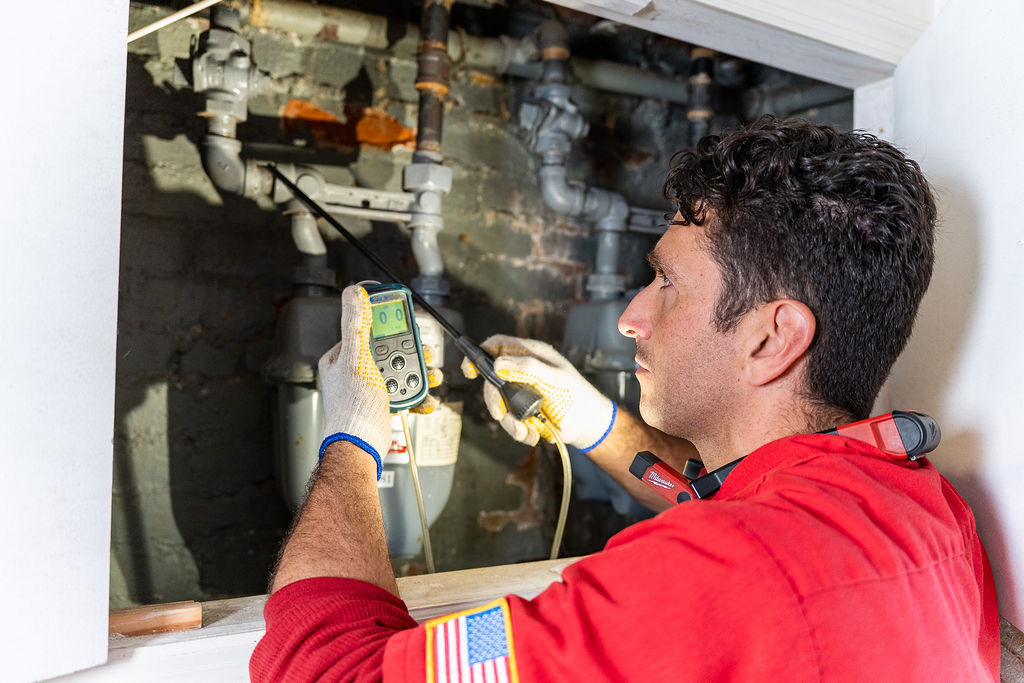
A gas leak is one of the most serious plumbing and safety issues a homeowner can face. Natural gas is commonly used for heating, hot water, cooking, dryers, boilers, and other appliances throughout Brooklyn homes and buildings. When everything is working properly, it is safe and reliable. When something is wrong, it needs immediate attention.
Gas leaks are not something to ignore, delay, or try to repair yourself. Even a small leak can create serious risks for your home, your family, your tenants, and your property.
This guide from A Good Plumber explains the most common signs of a gas leak, what to do if you suspect one, and when to call a licensed Brooklyn plumber for help.
First: What Should You Do If You Smell Gas?
If you smell gas or suspect an active gas leak, treat it as an emergency.
- Leave the home or building immediately
- Do not turn lights on or off
- Do not use phones, appliances, switches, or electronics inside the building
- Do not light candles, matches, cigarettes, or open flames
- Call 911 from a safe location
- Contact your gas utility from outside the building
Once the immediate emergency is handled, A Good Plumber can help inspect gas piping, address repairs, and guide next steps if your gas service is shut off.
Why Gas Leaks Happen in Brooklyn Homes
Brooklyn has many older homes, brownstones, multi-family buildings, and mixed-use properties. Older gas piping systems can develop problems over time, especially when pipes are exposed to moisture, corrosion, vibration, building movement, or past improper repairs.
Common causes of gas leaks include:
- Corroded gas piping
- Loose fittings or connections
- Damaged appliance connectors
- Improper gas line installation
- Aging valves
- Unpermitted gas work
- Wear and tear around boilers, water heaters, dryers, and stoves
Many gas leaks are discovered after a tenant complaint, utility inspection, failed appliance startup, or Local Law 152 gas piping inspection in Brooklyn.
7 Signs Your Home May Have a Gas Leak
Some gas leaks are obvious. Others are subtle. Knowing the warning signs can help you respond quickly before the situation becomes more dangerous.
1. Rotten Egg or Sulfur Smell
The most recognizable sign of a gas leak is a strong rotten egg or sulfur-like odor. Natural gas itself is odorless, so utility companies add an odorant to help people detect leaks.
Where you may notice the smell:
- Near a stove or oven
- Near a boiler or furnace
- Near a water heater
- In a basement or mechanical room
- Near exposed gas piping
- Inside a tenant space or hallway
If the odor is strong or sudden, leave the building immediately and call emergency services from a safe location.
2. Hissing or Whistling Near Gas Piping
A hissing or whistling sound near gas piping, appliances, valves, or connections may indicate gas escaping under pressure.
This sound may be easier to hear in quiet areas like basements, boiler rooms, utility closets, or behind appliances.
Do not try to locate the exact source yourself.
If you hear hissing near a gas line or appliance, leave the area and call for emergency help. After the area is made safe, a licensed plumber can inspect the piping and determine what repairs are needed.
3. Dead or Dying Plants Near Gas Lines
Outdoor gas leaks can sometimes affect nearby vegetation. If plants, grass, or shrubs suddenly die in one specific area near a gas line, meter, or service entry point, it may be a warning sign.
Watch for:
- Dead patches of grass
- Plants dying near a gas meter
- Unusual soil disturbance
- Bubbling in wet soil or puddles
Dead vegetation does not always mean there is a gas leak, but it is worth taking seriously if it appears near gas service equipment.
4. Higher Than Normal Gas Bills
A sudden increase in your gas bill can happen for many reasons, including colder weather, older heating equipment, or increased hot water use. However, unexplained gas usage can also be a warning sign of a leak or inefficient gas appliance.
If your bill rises sharply and your usage habits have not changed, it may be time to investigate.
Possible causes include:
- Small gas leaks
- Aging gas appliances
- Boiler or furnace inefficiency
- Water heater problems
- Gas piping issues
For more details, read our guide on why your gas bill is suddenly higher than normal.
5. Physical Symptoms Inside the Home
Gas leaks and combustion-related issues can sometimes cause symptoms for people inside the building. These symptoms may be more noticeable when you are near gas appliances or in enclosed areas.
Possible symptoms include:
- Headaches
- Dizziness
- Nausea
- Fatigue
- Shortness of breath
- Eye, nose, or throat irritation
These symptoms can have many causes, but if multiple people experience them in the same space, or symptoms improve after leaving the building, take the situation seriously.
6. Pilot Lights That Keep Going Out
If your gas appliance has a pilot light that keeps shutting off, it may indicate an appliance issue, draft problem, thermocouple failure, or gas supply concern.
Appliances that may have pilot light issues:
- Older water heaters
- Boilers
- Furnaces
- Gas fireplaces
- Older cooking appliances
A pilot light problem does not always mean there is a gas leak, but it should not be ignored. Repeated pilot light failures should be inspected by a qualified professional.
7. Gas Service Shutoff or Utility Warning
If your utility provider shuts off gas service or issues a warning, there is usually a safety or compliance reason behind it.
Gas service is not typically restored by simply turning the gas back on. In New York City, restoration can involve licensed plumbing work, inspections, filings, approvals, and utility coordination.
If your building has already experienced a shutoff, read our guide on what to do after a gas shutoff in Brooklyn.
Quick Gas Leak Warning Sign Chart
| Warning Sign | What It May Mean | What To Do |
|---|---|---|
| Rotten egg smell | Possible active gas leak | Leave immediately and call emergency services |
| Hissing near gas piping | Gas escaping under pressure | Leave the area and do not touch switches or appliances |
| Dead vegetation near meter | Possible underground or outdoor gas leak | Keep away and contact the proper utility or emergency service |
| Unusually high gas bill | Possible leak, inefficient appliance, or system issue | Review usage and schedule an inspection if unexplained |
| Gas service shutoff | Safety or compliance issue | Call a licensed plumber for next steps |
Gas Leak vs Sewer Gas Smell
Brooklyn homeowners sometimes confuse a gas leak with sewer gas odor. Both can smell unpleasant, but they are different problems with different risks.
| Issue | Common Smell | Possible Source | Urgency |
|---|---|---|---|
| Natural gas leak | Rotten egg or sulfur | Gas piping, appliance connection, meter, valve | Emergency |
| Sewer gas odor | Rotten, musty, drain-like odor | Dry trap, drain issue, venting problem, sewer line issue | Needs plumbing attention |
If you are unsure whether the smell is gas or sewer gas, treat it as a potential gas emergency first. Leave the area and call from a safe location.
What Not To Do If You Suspect a Gas Leak
When gas is present, even a small spark can create danger. Avoid anything that could ignite gas or make the situation worse.
Do not:
- Use light switches
- Use phones inside the building
- Turn appliances on or off
- Use matches, lighters, candles, or cigarettes
- Try to tighten gas fittings yourself
- Search for the leak with a flame
- Assume the smell will go away on its own
Leave the building first. Safety always comes before troubleshooting.
How A Good Plumber Can Help After the Emergency
Once the immediate danger is handled and the area is safe, A Good Plumber can help Brooklyn homeowners and property owners with the next steps.
Our team can assist with:
- Gas piping inspections
- Gas leak troubleshooting
- Gas line repairs
- Violation correction support
- Local Law 152 compliance
- Gas shutoff restoration support
- Clear guidance for property owners and managers
If your building requires a compliance inspection, learn more about Local Law 152 inspections in Brooklyn.
How To Reduce the Risk of Future Gas Problems
You cannot prevent every issue, but proactive maintenance and inspections can catch many problems before they become emergencies.
Smart prevention steps include:
- Schedule gas piping inspections when required
- Address corrosion early
- Keep boiler rooms and utility areas accessible
- Use licensed plumbers for gas piping work
- Respond quickly to tenant complaints about gas odors
- Keep records of repairs, inspections, and filings
- Do not ignore higher-than-normal gas usage
For Brooklyn landlords, co-op boards, condo associations, and property managers, staying ahead of gas piping safety is also part of protecting tenants and avoiding unnecessary service interruptions.
Need Help With Gas Piping in Brooklyn?
If you suspect an active gas leak, leave the building immediately and call emergency services from a safe location.
If the emergency has already been handled and you need gas piping inspection, repair, compliance help, or next steps after a shutoff, A Good Plumber can help.
Call (718) 648-6838 today for gas piping inspections, gas leak support, or Local Law 152 compliance help in Brooklyn.
